
School policies
Find important information on school policies.
Acceptable Use Policy
Acceptable Use Policy (AUP) for use of EdTech Resources
Purpose of the Acceptable Use Policy (AUP)
Technology is an essential part of learning in today’s world. This Acceptable Use Policy (AUP) establishes guidelines on the appropriate use of EdTech resources to help you understand how to use these resources safely and responsibly, in line with efforts to develop your digital literacies and growth as digitally responsible citizens.
EdTech resources include the following, but are not limited to:
Learning devices (e.g. School devices, iPads and school laptops)
ICT system accounts (e.g. Singapore Student Learning Space (SLS), iCON and Koobits); and school internet networks.
For more information, please refer to:
Student Kit on Cyber Wellness and Learning with a Learning Device (Primary) – https://go.gov.sg/cw-studentkitpri (opens in new tab)
General
You should not attempt to access data, system and information that you are not authorised to.
You are reminded that the use of learning devices and school’s EdTech resources should solely be for the purpose of learning.
Being a Responsible Digital Citizen
You should interact with others in a respectful and responsible way. You should not post online remarks that are
racially and/or religiously insensitive,
vulgar and/or offensive, or
hurtful to others.
You should not use any devices to
store, modify, create or share content (e.g. documents, presentations, pictures and videos) that is inappropriate (e.g. indecent, pornographic, defamatory, hurtful to self or others).
make threats, cause harassment or embarrassment, impersonate or intimidate others.
You should not use MOE/school-deployed ICT system accounts for any commercial activities (e.g. buying and selling of goods and services).
Non-compliance with the above will lead to disciplinary action in accordance with the school’s discipline policy.
Respecting Copyright
You are reminded to obtain explicit permission from the content owner(s) before downloading, copying or sharing any copyrighted materials (e.g. pictures, videos, music).
You should not use, copy, edit or share digital files in an unauthorised or illegal manner.
Using Artificial Intelligence (AI)
You must ensure that you meet the minimum age requirement specified in each AI tool's age restrictions before using it.
If the use of AI is permitted, you should acknowledge the use of AI in weighted assessments and homework as required.
You are to practice academic integrity and be responsible for your own learning when using AI. Understand that you are ultimately short-changing yourself if you pass off other’s work as your own.
Staying Safe and Secure Online
You should report any incidents (e.g. unusual device behaviour or inappropriate use of devices), to the school.
You are reminded to develop online safety habits. This includes not disclosing personal access credentials (e.g. MIMS password, etc.), sensitive personal data (e.g. home address, passwords) online or on AI platforms, verifying credibility of online content before sharing, avoiding clicking on suspicious links or downloading unknown files, and being cautious when interacting with others online (e.g. on social media) by not engaging with strangers.
You should exercise caution regarding the limitations of AI tools, including potential inaccuracies / fabricated responses, inherent biases and outdated information.
Digital Wellbeing and Balance
You are reminded to balance screentime with other activities including physical exercise and face-to-face social interactions.
You should avoid excessive use of your devices outside learning hours.
You should take regular breaks to rest your eyes and mind.
You are reminded to practice good sleep hygiene by not using your devices one hour before bedtime
Assessment Policy
Absence Due to Medical or Other Valid Reason
Student who are absent due for Weighted Assessments (WA)/Continual Assessments (CA)/End-of-Year Examinations (EYE) due to medical reasons or other valid reasons (e.g bereavement) must submit a medical certificate or official valid document to their Form Teacher upon their return.
Medical certificate must be produced in order for the teacher to key in ‘VR’ in the report book.
There will be no make-up assessment.
Absence without Valid Reason
Students who are absent without a valid reason for WA, CA or EYE:
will not be awarded any marks for the paper which they have missed. The teacher will key in ‘AB’ in the report book.
Late-coming
Students who are late will need to:
report to the general office.
sit for their examination in a separate room.
sit for their examination within the duration of the paper and no extra time will be given.
Examination Materials
Students expected to bring the required examination materials (e.g. standard Mathematical instruments, calculator, blue/black ballpoint pen with a 0.5mm tip, 2B pencil, and dictionary) for their examination.
The school will not provide students with these materials during the examination.
Things to take note before the examination
Students are to:
be in school uniform and be punctual for all examination papers.
bring all materials needed for the examination. They include blue / black ballpoint pens, 2B pencils, soft erasers, sharpeners and standard mathematical instruments (ruler, protractor and set squares).
place all bags, water bottles & other belongings neatly outside the classroom.
pay attention when the invigilator is giving instructions.
Points to note in the Examination FOR ALL PAPERS
Shading of answers to Multiple Choice Questions
Students should use a 2B pencil to shade your answers on the Optical Answer Sheet (OAS). They are to shade the oval completely and firmly. Not doing so may result in unclear answers.
Students can use a soft eraser to erase their answers. Erase the shaded oval completely before shading the new oval.
Questions that require you to provide your answers on the answer booklet:
Students should write their answers clearly in blue / black ballpoint pen with a 0.5mm tip. This is to reduce possible smudging and to ensure clarity of writing. It is also not advisable to use erasable ink pen.
If students need to change their answers, cross them out and re-write the answers. Do not use correction fluid / tape in the examinations as it may affect the legibility of the answers.
Students should not highlight any part of their answers using a highlighter as this may also affect legibility of the answers.
Things to take note during the exam
There should be no eating or drinking in the examination room.
All bags and water bottles must be placed outside the classroom.
Instructions are to be read carefully. Answer all questions. It is the student’s responsibility to check that all questions in the exam papers have been answered and that there are no defects or misprint in the exam papers.
Students are to raise their hands if they have any questions to ask the invigilator.
If there is a need to use the washroom urgently, students are to remain seated and raise their hand to inform the invigilator.
No communication (verbal & non-verbal) with other candidates is allowed during the examination.
No student is allowed to leave the classroom during the first and last 15 minutes of each paper.
Things to take note at the end of exam
Students are to stop writing immediately when told to do so by the invigilator.
Students are to remain quiet and be seated until instructed by the invigilator.
For P5 & P6 students only Use of Dictionaries
For Mother Tongue, HMT & NTIL paper 1 (Composition).
Electronic handheld dictionary for CL & HCL Paper 1.
All dictionaries must bear the school stamp.
Only monolingual dictionaries are allowed.
Dictionaries must not have any annotations such as tagging pages with stickers, highlighted text and/or written text, on any of the pages.
Electronic dictionaries must be silent and battery-operated. Earpieces are not permitted.
Use of Scientific Calculators
The calculator must be silent, with a visual display only.
The working condition of the calculator (including the power supply) is the responsibility of the students.
Students are not allowed to share calculators during the examination.
No calculators with an external storage function which can allow users to input and store data via external storage media, e.g., cards, tapes, and plug-in modules, are allowed.
No calculators with wireless communication capability with other machines, e.g., infra-red communication capability, are allowed.
Any enclosed instruction leaflets containing any mathematical formula, conversion table or instructions are strictly prohibited, and must not be taken into the examination venue. Any such information on the calculator that cannot be removed must be securely covered.
The original model number and brand must be indicated clearly on the calculator for verification purposes.
No calculators with capabilities for storing and displaying verbal information are allowed.
Cheating and Misconduct
Students are not to cheat or assist in cheating.
Bags, books, papers, notes, mobile phones, computerised wrist watches or other unauthorized personal belongings (such as computerized devices, communications devices, smart devices etc.) are not to be brought into the examination room.
Any student found to be in possession of such unauthorised materials is liable to the same penalty as those caught cheating during the examination.
Any students who cheat, attempt to cheat or assist in cheating during the examination, may be expelled from the examination and will not be allowed to sit for subsequent papers. Examination results may be forfeited.
Misbehaviour or failure to follow the examination regulations during the examination may result in expulsion from the examination and the student will not be allowed to sit for subsequent papers. Examination results may be forfeited.
Homework Policy
Homework Policy
1. Homework Policy
The Homework Policy helps parents understand how homework is designed, assigned, and managed to support their child's learning and overall development. The policy aims to:
Reinforce classroom learning through purposeful and meaningful assignments.
Foster critical thinking, creativity, and self-directed learning skills in students.
Promote a healthy balance between academic work, personal interests, family time, and well-being.
Ensure inclusivity by catering to diverse learning needs and readiness levels through differentiated homework.
Establish effective tracking and communication systems to promote consistency, accountability, and collaboration among teachers, students, and parents.
2. General Guidelines
Homework is designed to provide students with focused practice while maintaining a healthy balance between academics and personal development. Emphasis is placed on quality and consistency, rather than excessive or repetitive tasks. By adhering to homework time guidelines, we ensure that students benefit from meaningful and manageable assignments without feeling overwhelmed
2.1 Homework for English, Mathematics, Science and Mother Tongue during School Term
Level | Monday to Friday | Weekend |
P1 & P2 | Total not more than 1 hour per day (Not more than 20 min per subject) | Total not more than 1 hour (Not more than 20 min per subject) |
P3 & P4 | Total not more than 1.5 hours per day (Not more than 22.5 min per subject) | Total not more than 2 hours (Not more than 30 min per subject) |
P5 & P6 | Total not more than 2 hours per day (Not more than min per subject) | Total not more than 3 hours (Not more than 45 min per subject) |
2.2 Homework for English, Mathematics, Science and Mother Tongue during School Holidays
Level | March and September | June |
P1 & P2 | Total not more than 1.5 hours (Not more than 30 min per subject) | Total not more than 3 hours (Not more than 1 hour per subject) |
P3 & P4 | Total not more than 2.5 hours (Not more than 37.5 min per subject) | Total not more than 5 hours (Not more than 1 h 15 min per subject) |
P5 & P6 | Total not more than 4 hours (Not more than 1 hour per subject) | Total not more than 8 hours (Not more than 2 hours per subject) |
School holidays are a time for students to rest, recharge, and explore their interests. Homework during this period will be kept moderate and meaningful, reinforcing key learning without being overwhelming, so students can enjoy a well-deserved break.
2.3 Homework during Public Holidays
To give students a break from formal learning and allow them to spend quality time with their families, no homework will be assigned during public holidays.
3. Role of Students
To maximise their homework and learning experience, students should cultivate good habits and take responsibility for their assignments.
Students can develop effective homework habits by adhering to the following responsibilities:
Record all assignments from the Homework Board in the Student Handbook for easy reference.
Ensure they understand each task and seek help if needed.
Complete all homework with quality and submit it on time.
Review teacher feedback, make corrections, and learn from mistakes.
Establish and follow a home study timetable to manage time effectively.
4. Role of Parents
Parents play a vital role in supporting their child’s learning and homework routine. By creating a positive home environment for studying, setting expectations, and maintaining open communication with teachers, parents can help their child develop good habits, manage time effectively, and foster a love for learning.
Parents can support their children’s learning by:
Checking the Student Handbook for homework assignments.
Encouraging quality work and monitoring homework progress.
Ensuring all assignments are completed on time.
Guiding them to set a regular study time and develop good study habits.
Communicating with teachers about their child’s progress.
Mobile Phone or Smart Device Policy
Any Device Capable of Storing/Providing Information is considered a smart device (e.g. smart watch)
With the advancement of technology, owning mobile phones or any smart device capable of storing or providing information is increasingly becoming commonplace. The school recognises that parents need the ease and convenience of contacting their children after school hours. While the school allows students to bring mobile phones or any smart device to school, it is not encouraged. Students who bring mobile phones or a smart device to school are to adhere to the following guidelines as listed below:
1. Proper Usage in School
Usage of mobile phones, smart device or smart watch is allowed only in the canteen either before school or after school hours to contact care-givers/ parents. The devices are to be switched off during other times and be kept out of sight during all school activities.
All smart devices will be held by the teacher during assessments and examinations.
2. Confiscation and Collection
If a student is caught using mobile phone, smart device or smart watch outside the permissible time and place, his/her mobile phone, smart device or smart watch will be confiscated.
The form teacher or another staff member will contact the parent to make arrangements to collect the mobile phone, smart device or smart watch from the General Office.
Student’s privilege to bring his/her mobile phone, smart device or smartwatch to school may be removed.
3. Loss of Mobile Phones or Smart Devices
If students bring mobile phones or smart devices to school, they should beresponsible for their property and not flaunt it or invite envy and draw attention to it.
The school will not be held accountable for any damage or losses.
To reach students in cases of emergency, parents can call the General Office at Tel: 65851421 if they need to contact their children. Students can also make calls to parents / caregivers using a public phone in the canteen or from the General Office, if necessary.
Rules for Using Lockers
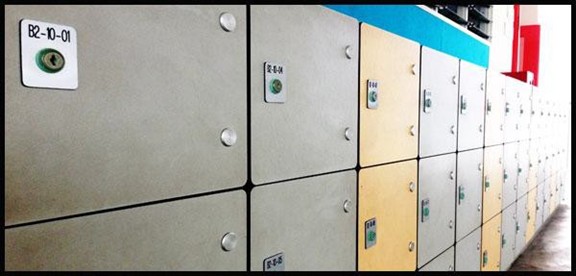
In line with our school’s efforts to improve our pupils’ wellbeing and to create a better learning environment, each pupil will be assigned a locker outside his/her classroom.
1. Use of Lockers:
Each pupil will be assigned either of the following two types of lockers.
P1 Pupils only: Lockers that require a key to open up the locker door.
P2 – 6 Pupils: Lockers that need to be secured by an external padlock.
Kindly take note of the rules of use for each type
For P1 Lockers with Key:
Each pupil is issued a locker key and it is his/her responsibility to safe keep the key until the time when the form teacher collects it back in Term 4.
There will be a replacement cost of $2.50 for every lost key reported.
For P2-P6 Lockers with external padlock required:
Pupils are required to purchase their own padlocks.
There are no restrictions on the type of padlock to be purchased. Pupils are reminded to buy a padlock of the correct size and proper strength.
It is encouraged but not compulsory for pupils to purchase the padlock from the school bookshop to ensure the correct dimensions & strength required.
Pupils are reminded to be responsible for their keys as the school does not have a duplicate key if the pupils lose their keys.
Pupils must take full responsibility for the items stored in the lockers.
Pupils are advised not to store any money or valuables in their lockers.
Storage of any items that are illegal in nature, would cause or be likely to cause a health hazard,
security risk, physical danger or a nuisance to the environment or other members of the school, is prohibited.
In case of any loss or damage, pupils must report to their Form Teacher immediately.
2. Clearance and Return of Lockers:
At the end of the academic year, pupils must clear their lockers. The school will announce an exact deadline. After this date, the school shall have the authority to open such lockers and dispose of all property found therein.
3. Violation of the locker regulations:
Any violation of the locker regulations by the users may result in termination of the use of lockers.
4. The school shall not be liable in any circumstance for any loss or damage of property stored in any locker.
Thank you for using our lockers responsibly for the benefit of all pupils.
School Bag Policy
Pupils of primary school age are still at a growing age, and it is important that they do not carry excessive loads that may cause them harm or injury. The following are our school’s guidelines to help you to PACK right every day.
P – Plan the night before what you need for the next school day and take only what you need! Do not bring unnecessary items such as big umbrellas or toys. Pack according to the lessons for the day.
A – Avoid heavy items. Opt for lighter water bottles and pencil cases, where possible. Trolley bags are not recommended as they are cumbersome and are a hassle when using the stairs. Bags should be lightweight with cushions and adjustable straps.
C – Carry your bag properly using both straps instead of just one. This distributes the weight evenly across your shoulders and will not cause unnecessary stress on your back.
K – Keep proper posture.
For the well-being of our pupils, every pupil is provided with a complimentary use of lockers. These lockers are for you to store books and materials not related to the four main subjects.
Based on guidelines by the Health Promotion Board, you should not be carrying more than 10 – 15% of your body weight.
Do use the template below to help you maintain an acceptable bag weight.
Weight of my bag | Acceptable Weight (10% of my weight) | Excess Weight | What I can do to shed the excess |